BUGGY is pretty independent. While she likes Buddy, she can play on her own. He craves constant interaction, especially from her. While let loose on the floor, she can crawl away from him, and he'll try to follow. He can't crawl, he can only roll, and not necessarily the direction he wants to go. So when he captures the object of his desire, her, he holds on tight.
"I got you now!"
"Let go! Dad!"
Tuesday, January 8, 2013
Buggy Backup and Buddy Rockin' Roll(over)
THE New Family Twins are really mobile now.
Buggy now "crawls" regularly, but with more strength in her arms than in her rear, she tends to push herself backward rather than move forward. Buddy has yet to get up on all fours, but wanting to keep up with his sister he has figured out how to rollover to her.
Above, Buggy rocks back and forth until her legs slip backward out from underneath her, at which time she pushes herself back up onto all fours. After some minutes she will have backed up by several feet.
Over the period of just a few seconds, Buddy starts out on the mat and ends on the carpet.
Buggy now "crawls" regularly, but with more strength in her arms than in her rear, she tends to push herself backward rather than move forward. Buddy has yet to get up on all fours, but wanting to keep up with his sister he has figured out how to rollover to her.
Above, Buggy rocks back and forth until her legs slip backward out from underneath her, at which time she pushes herself back up onto all fours. After some minutes she will have backed up by several feet.
Over the period of just a few seconds, Buddy starts out on the mat and ends on the carpet.
Sunday, January 6, 2013
First to Crawl and Other Changes
IT is official, Liesel is the first to crawl.
She does it in reverse, but hey, she will get there.
She began about two weeks ago. She would get up on all fours and rock back and forth. Then she added a butt wiggle motion. Then she began to actually move, as in change her physical location, and not by rolling but by actually crawling.
Buddy Too still gets about by rolling over. And he isn't real motivated to do that, so he'll be stationary a while longer.
Now that she has had tasty solids, the bottle isn't terribly interesting to her. She still feeds from it, but not if she is hungry or tired. And it takes her ten to fifteen minutes to finish 4.5 ounces.
He will eat anything and everything (including Dad's socked foot) in any form presented to him.
They have had a role reversal in going down for naps as of the past few days. He would typically cry for a few minutes when put down, while she would often go down with minimal fuss. Now he goes down easily, and she cries on and on. And Dad's favorite trick to avoid any and all tears of protest no longer works. She now doesn't care for her binky and cry despite having it in her mouth.
She does it in reverse, but hey, she will get there.
She began about two weeks ago. She would get up on all fours and rock back and forth. Then she added a butt wiggle motion. Then she began to actually move, as in change her physical location, and not by rolling but by actually crawling.
Buddy Too still gets about by rolling over. And he isn't real motivated to do that, so he'll be stationary a while longer.
Now that she has had tasty solids, the bottle isn't terribly interesting to her. She still feeds from it, but not if she is hungry or tired. And it takes her ten to fifteen minutes to finish 4.5 ounces.
He will eat anything and everything (including Dad's socked foot) in any form presented to him.
They have had a role reversal in going down for naps as of the past few days. He would typically cry for a few minutes when put down, while she would often go down with minimal fuss. Now he goes down easily, and she cries on and on. And Dad's favorite trick to avoid any and all tears of protest no longer works. She now doesn't care for her binky and cry despite having it in her mouth.
Thursday, January 3, 2013
Play Time Together
HERE is some vdeo clips for readers to enjoy.
The kids enjoy interacting with each other. When they have been separated for a while, as they typically are during a nap, their faces light up with joy when they see each other.
Dad is still editing other video clips and will have them up when they are ready.
The kids enjoy interacting with each other. When they have been separated for a while, as they typically are during a nap, their faces light up with joy when they see each other.
Dad is still editing other video clips and will have them up when they are ready.
Tuesday, January 1, 2013
New Year's Resolutions
WHAT are your New Year's resolutions?
Mom and Dad's resolutions are the same ones they are every year (get in shape, lose weight, eat healthier, blah blah blah).
Dad is usually good for about eight weeks. He can get down to about 5 lbs. of his ideal weight, but then the carbs start calling. It is subtle at first, a plate full of french fries flies by him in a restaurant on its way to another diner. Then it becomes more overt, the bread rolls get placed in front of him and stare at him during the entire meal. Then they slowly become an increasing portion of his diet until, oops, he is 15 lbs. overweight.
So his resolution this year is not just the same old resolutions, but a resolution to keep the same old resolutions until April 15th.
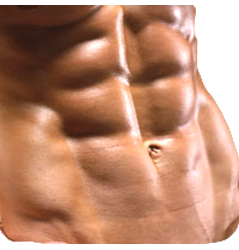
Oh yeah, and to have this
by using this
by tax day too.
You can stop laughing now.
Mom and Dad's resolutions are the same ones they are every year (get in shape, lose weight, eat healthier, blah blah blah).
Dad is usually good for about eight weeks. He can get down to about 5 lbs. of his ideal weight, but then the carbs start calling. It is subtle at first, a plate full of french fries flies by him in a restaurant on its way to another diner. Then it becomes more overt, the bread rolls get placed in front of him and stare at him during the entire meal. Then they slowly become an increasing portion of his diet until, oops, he is 15 lbs. overweight.
So his resolution this year is not just the same old resolutions, but a resolution to keep the same old resolutions until April 15th.
Oh yeah, and to have this
by using this
by tax day too.
You can stop laughing now.
Roast Beast
DAD gets feedback on the blog. In person the general consensus is "please post less food and more adorable babies." Okay, but when he looks at page views, food posts remain among the most popular. So someone is enjoying them.
For Christmas the New Family Dad made rib roast.
Above is what 133 degrees looks like. Dad would've preferred 125 degrees, but this was cooked to order for the New Family guests (who contributed money to its purchase, so darn right they were going to get it their way).
Notice the lack of ANY gray meat? Many roasts are brown on the surface, with a wide swath of gray and a small circular pink or even red center. That is roast #fail.
Long post: Click to continue reading.
The best method of preparation Dad has found is to dry age the roast for 4 ~ 7 days in the refrigerator. He coats the entire roast in kosher salt, wraps it in dish towels, and changes them daily.
On the day of service, he coats the roast in oil and browns all sides of it in a heavy porcelain coated cast iron pot. The dryer the surface, the better and faster it browns. Speed is extremely important because the heat at the surface begins to cook the roast leading to the unwanted gray meat.
Then he allows the surface and internal temperature to reach equilibrium, about 30 minutes of just sitting on the counter covered in aluminum. He inserts a probe thermometer into its center, and puts it into the oven, typically in the same cast iron pot (deglazed and cleaned of course).
Any spices to flavor the exterior go on at this point. Dad's guests prefer plain to highly seasoned, so he skipped that this time.
Then he brings the oven temp up to 200 degrees, holds it there for about 1/4 hour, and then reduces it to 10 degrees above his desired final cooking temperature, 135 degrees here. While warming to 200 degrees, he takes the cast iron pot's surface temperature with an infrared thermometer. The pot never exceeds 175 degrees.
As the probe thermometer readings close in on desired doneness, he turns off the oven and keeps the door closed. Depending on the direction of internal temperature change (increasing or decreasing) he warms or cools the oven as necessary to maintain the roast at just a few degrees below final doneness.
He can hold the roast like this for very long periods of time, but it requires constant monitoring and temperature measurement.
Thus, late company is not appreciated.
He'll typically start the process on the day of service 6 hours before dinner. The final two hours are generally holding the roast at final doneness.
Then, about 20 minutes before service, he'll allow the roast to rest on the counter covered in foil, which he is told allows the juices to redistribute. He does not know if he believes this, but is not going to experiment on a $75 roast.
As far as sanitation is concerned, the surface of beef is the critical area of importance to reduce the growth of bacteria. Two measures limit bacterial growth, first the salt is very hostile to bacteria, second the browning in the pot kills whatever manage to hang around despite the salt. Unless penetrated with an unsanitary utensil, the interior of beef is generally safe to consume for healthy adults.
And as for holding a roast at a final temperature for extended periods, Dad reads Cooks Illustrated that food service will hold roasts at final doneness for up to 24 hours before service. So he is comfortable with the low and slow process or around six hours.
Click HERE to return to the blog.
For Christmas the New Family Dad made rib roast.
Above is what 133 degrees looks like. Dad would've preferred 125 degrees, but this was cooked to order for the New Family guests (who contributed money to its purchase, so darn right they were going to get it their way).
Notice the lack of ANY gray meat? Many roasts are brown on the surface, with a wide swath of gray and a small circular pink or even red center. That is roast #fail.
Long post: Click to continue reading.
The best method of preparation Dad has found is to dry age the roast for 4 ~ 7 days in the refrigerator. He coats the entire roast in kosher salt, wraps it in dish towels, and changes them daily.
On the day of service, he coats the roast in oil and browns all sides of it in a heavy porcelain coated cast iron pot. The dryer the surface, the better and faster it browns. Speed is extremely important because the heat at the surface begins to cook the roast leading to the unwanted gray meat.
Then he allows the surface and internal temperature to reach equilibrium, about 30 minutes of just sitting on the counter covered in aluminum. He inserts a probe thermometer into its center, and puts it into the oven, typically in the same cast iron pot (deglazed and cleaned of course).
Any spices to flavor the exterior go on at this point. Dad's guests prefer plain to highly seasoned, so he skipped that this time.
Then he brings the oven temp up to 200 degrees, holds it there for about 1/4 hour, and then reduces it to 10 degrees above his desired final cooking temperature, 135 degrees here. While warming to 200 degrees, he takes the cast iron pot's surface temperature with an infrared thermometer. The pot never exceeds 175 degrees.
Why such a cool oven? An oven is analogous to a car where heat is speed. Imagine a car that needs to stop at a precise point on the pavement with a margin for error of 1 inch in front of or behind that point. Which car will stop more closely to that point, the one traveling 10 m.p.h. or the other traveling at 70 m.p.h.?
Fast ovens, those at 350 degrees and above, cause the roast to continue cooking even when removed from the oven. It is possible to pull it from the oven a few degrees before final doneness, but you have to guess when to pull it. You have little control and a roast with widely varying internal temperature.
Slower ovens, in contrast, allow you much more control and distribute the heat much more uniformly throughout the roast. Moreover, you don't have to guess how much residual heat will carryover.
As the probe thermometer readings close in on desired doneness, he turns off the oven and keeps the door closed. Depending on the direction of internal temperature change (increasing or decreasing) he warms or cools the oven as necessary to maintain the roast at just a few degrees below final doneness.
He can hold the roast like this for very long periods of time, but it requires constant monitoring and temperature measurement.
Thus, late company is not appreciated.
He'll typically start the process on the day of service 6 hours before dinner. The final two hours are generally holding the roast at final doneness.
Then, about 20 minutes before service, he'll allow the roast to rest on the counter covered in foil, which he is told allows the juices to redistribute. He does not know if he believes this, but is not going to experiment on a $75 roast.
As far as sanitation is concerned, the surface of beef is the critical area of importance to reduce the growth of bacteria. Two measures limit bacterial growth, first the salt is very hostile to bacteria, second the browning in the pot kills whatever manage to hang around despite the salt. Unless penetrated with an unsanitary utensil, the interior of beef is generally safe to consume for healthy adults.
And as for holding a roast at a final temperature for extended periods, Dad reads Cooks Illustrated that food service will hold roasts at final doneness for up to 24 hours before service. So he is comfortable with the low and slow process or around six hours.
Click HERE to return to the blog.
Subscribe to:
Posts (Atom)